

Why Grading Large Classes Feels So Draining
It’s late evening. You’re staring at a stack of quizzes from more than a hundred students. You planned to finish grading tonight, but after the first few papers, your energy is already fading. The math starts to blur. You double-check scores. You worry about mistakes.
If this sounds familiar, you’re not alone.
Grading large classes is one of the biggest hidden stress points in teaching. The issue is not effort or commitment. It’s using the same grading method for every assignment, regardless of class size or assessment type. When grading methods don’t scale, burnout follows.
The good news is simple: grading does not have to take over your evenings or weekends. By choosing the right grading approach for the right task, teachers can save hours each week while staying accurate and fair.
This guide explains the difference between individual grading and bulk grading, shows when each method works best, and provides practical strategies to help you grade 100+ students without exhaustion.
What Is Individual Grading?
Traditional One-by-One Assessment
Individual grading is the most familiar method. You review each student’s work separately, calculate the score, and often write personalized feedback.
This method works well when the goal is deep understanding, not speed.
When Individual Grading Is the Right Choice
Individual grading is best used for assignments that require professional judgment, such as:
- Essays and written responses
- Research papers
- Creative projects and presentations
- Open-ended problem solving
- Reflective or analytical work
In these cases, feedback matters more than speed. Students benefit from comments that explain strengths, gaps, and next steps.
Why Individual Grading Breaks Down in Large Classes
The problem starts when individual grading is applied to high-volume, objective assessments. For quizzes and tests with clear right or wrong answers, individual grading becomes repetitive and mentally draining.
Common challenges include:
- Repeating the same calculations dozens of times
- Increased risk of math errors when tired
- Slower turnaround time for students
- Grading stretching late into the night
Grading 120 quizzes at two minutes each quickly turns into four hours of repetitive work. Over time, this workload leads directly to burnout.
⚡ Manual grading or Easy Grader—find out which truly saves your time without losing accuracy.
What Is Bulk Grading?
A Scalable, Teacher-Friendly Approach
Bulk grading (also called batch grading or mass grading) is a method designed for speed and consistency. Instead of grading students one at a time, you set grading rules once and apply them across the entire class.
How Bulk Grading Works in Practice
For example:
- A 20-question quiz
- Standard letter grading scale
- Objective answers
You enter the total number of questions once. Then, for each student, you only record how many answers were incorrect. The percentage, letter grade, and GPA (if needed) are calculated instantly.
This approach removes repeated math and allows teachers to focus on reviewing results rather than calculating them.
Best Uses for Bulk Grading
Bulk grading is ideal for:
- Multiple-choice quizzes
- Unit tests and exams
- Worksheets and practice sets
- Standardized or common assessments
- Large lecture or multi-section classes
When accuracy and efficiency matter more than written feedback, bulk grading is the most practical option.
Bulk Grading vs Individual Grading: A Clear Comparison
| Factor | Individual Grading | Bulk Grading |
|---|---|---|
| Time per student | 2–5 minutes | 30–60 seconds |
| Mental effort | High | Low |
| Accuracy | Prone to fatigue errors | Consistent and precise |
| Best for | Essays, projects | Quizzes, tests |
| Scalability | Poor for large classes | Excellent |
| Burnout risk | High | Low |
The key insight is simple: these methods are not competing. They are complementary.
Why Individual Grading Causes Burnout in Large Classes
Repetition Without Value
Grading the same type of question repeatedly forces teachers into mechanical work that offers little instructional insight. This drains mental energy quickly.
Cognitive Overload
Switching focus between papers, recalculating scores, and checking accuracy taxes working memory. After dozens of papers, errors become more likely.
Late-Night Grading Risks
Most grading happens after school hours, when concentration is lower. Mistakes made late at night often lead to re-grading, stress, and reduced confidence in fairness.
Emotional Cost
Teachers care deeply about accuracy. Even small grading errors create anxiety and extra work, compounding stress over time.
How Bulk Grading Reduces Burnout
One Setup, Many Students
Bulk grading removes repetition. Once grading rules are set, the process becomes systematic rather than mentally exhausting.
Fewer Steps Per Paper
Instead of counting, calculating, checking, and writing, teachers only input results. The tool handles the rest.
Faster Completion, Better Focus
Finishing grading earlier means teachers stay alert and can notice learning patterns, such as questions many students missed.
Tools That Support Teachers
Tools like Easy Grader, Teacher Grader, and Class Grader handle calculations accurately. They do not replace professional judgment. They remove arithmetic so teachers can focus on teaching decisions.
Grading Strategies for Large Classes: Choosing the Right Method
When to Use Individual Grading
Use individual grading when assignments require interpretation, creativity, or written reasoning. This includes:
- Essays and long responses
- Projects and presentations
- Creative or reflective work
These tasks benefit from thoughtful feedback and teacher insight.
When to Use Bulk Grading
Use bulk grading for objective assessments where speed and consistency are essential:
- Weekly quizzes
- Unit tests
- Skill checks
- Practice worksheets
Students receive fast, accurate results, and teachers save significant time.
The Smart Approach: Combine Both
Effective teachers mix methods:
- Depth for major assignments
- Speed for routine assessments
Grading tools manage numbers. Teachers manage learning.
Real Classroom Example: Grading 100+ Students Efficiently
A biology teacher with four sections (118 students total) gives a weekly 20-question quiz.
Individual grading time: Approximately 5 hours
Bulk grading time: About 90 minutes
Weekly time saved: Over 3 hours
Over a full school year, this approach saves more than 140 hours, time that can be reinvested into lesson planning, student support, or rest.
Accuracy, Fairness, and Consistency in Large-Class Grading
Reduced Calculation Errors
Automated calculations eliminate common mistakes caused by fatigue.
Consistent Grading Standards
Every student is graded using the same scale, improving fairness and transparency.
Reduced Bias
Objective grading tools score answers consistently, regardless of handwriting, order, or teacher fatigue.
Practical Tips to Grade Without Burnout
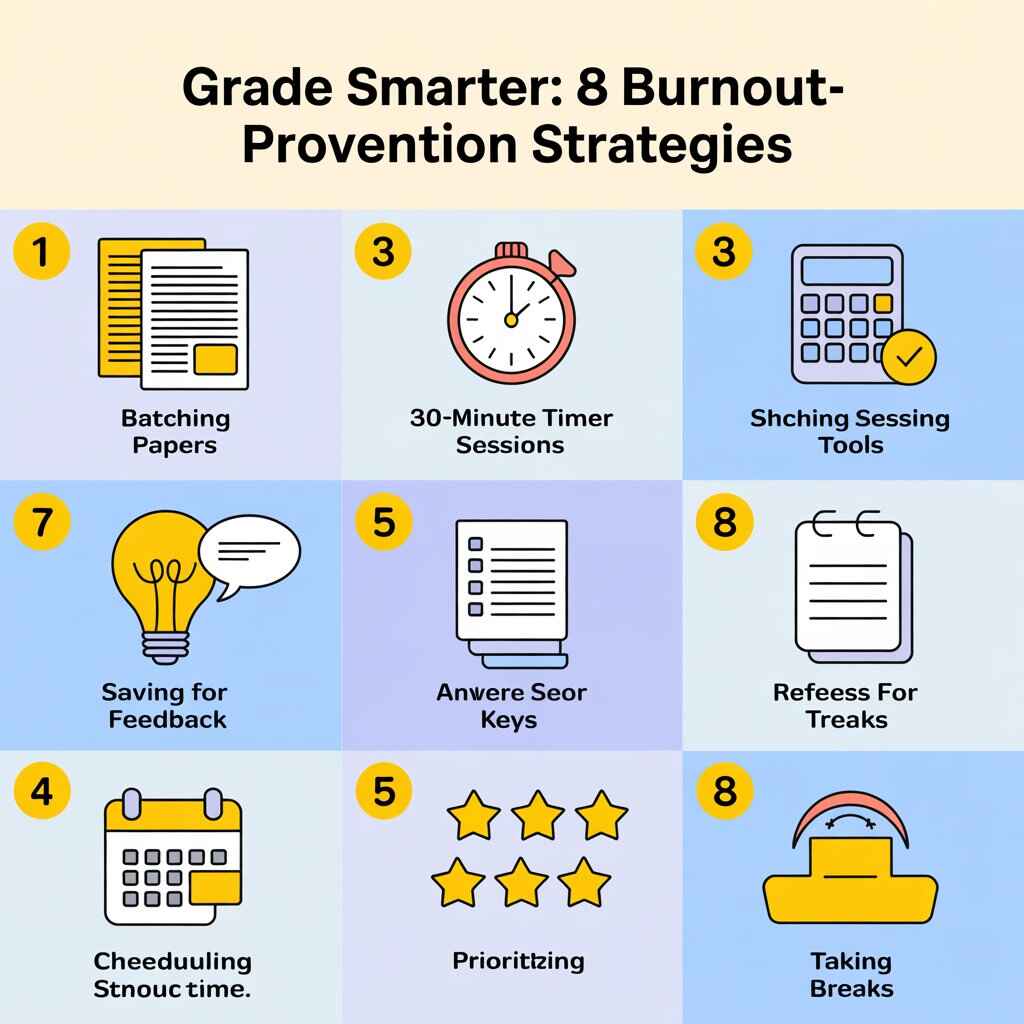
- Batch similar assignments together
- Grade in focused 30–45 minute sessions
- Use tools for calculations
- Save detailed feedback for high-impact work
- Schedule grading time intentionally
- Stop when fatigue appears
Sustainable grading protects both teachers and students.
Final Takeaway: Grade Smarter, Not Longer
Grading shouldn’t eat your weekends. Bulk grading handles the busywork. Individual grading handles the feedback. Used together, they solve the volume problem without killing quality.
Teachers grading 100+ students follow one rule: automate the routine, personalize what matters.
Bulk grade: Tests, quizzes, multiple choice
Individual grade: Essays, projects, complex work
This cuts grading time 60-70%. Mistakes drop to zero. Burnout becomes manageable.
You’re not a calculator. Stop grading like one. Handle bulk work in minutes. Save your energy for students who need real feedback. Your time is finite. Protect it.
Frequently Asked Questions (FAQs):
What is bulk grading?
You grade multiple students at once using one set of rules. Set up your grading system once, then process the entire class. Works best for quizzes, tests, and worksheets with clear right or wrong answers.
Is bulk grading accurate?
Yes, more accurate than manual grading. When you grade 100 papers by hand at night, math errors happen. A calculator does the same calculation correctly every time. No transposing numbers or miscalculating percentages.
How do teachers grade 100+ students?
Use bulk grading for quizzes and tests. Give individual attention to essays and projects where feedback matters. Tools like teacher grader and class grader handle the math. Batch similar work grade all biology quizzes in one sitting instead of jumping between subjects.
Which grading method saves the most time?
Bulk grading for objective assessments. I grade 100 quizzes in 90 minutes. Individually? Nearly 5 hours. Essays still need careful reading. The method should match the assignment.
How do teachers grade large classes?
Bulk grade quizzes and multiple-choice tests. Individual attention for major papers. Calculators handle math, you notice learning patterns. Schedule grading time like you schedule planning periods.
How long should grading take?
Objective assessments with bulk grading: 30 to 60 seconds per student. Essays: 3 to 8 minutes. 100 quizzes should take 60 to 90 minutes. 25 essays need about 2 hours.
Is individual grading better than bulk grading?
They serve different purposes. Essays need individual attention for evaluating arguments and critical thinking. Vocabulary quizzes need bulk grading for speed and accuracy. Use both strategically.
What tools help teachers grade faster?
Grade calculators eliminate repetitive math. Easy Grader for quick checks. Teacher Grader for daily assessments. Class Grader for bulk grading entire classes eliminates manual calculations. These tools don’t replace teaching judgment while they handle the arithmetic so you can focus on identifying learning gaps and planning instruction.
How do teachers avoid grading burnout?
Grade similar assignments together. Work in 30 to 45-minute sessions. Let tools handle calculations. Save detailed feedback for major assignments. Schedule and protect grading time. Stop when tired—late-night mistakes create tomorrow’s corrections.
Can grading be automated?
Objective grading (multiple choice, true/false, matching) can be automated with tools like Class Grader or learning management systems. Subjective grading (essays, creative projects) still requires teacher judgment and can’t be fully automated and should not be fully automated. Personalized feedback is where real learning happens. The goal is to automate calculations, not assessment.
What is the fastest way to grade tests?
Set your grading scale once. Record wrong answers for each student. Get instant grades. For mixed tests, bulk grade objective questions first, then individually grade written portions. 100 students: 45 to 90 minutes total.